
Falun Dafa for Beginners: The Practice and Its Five Exercises
Falun Dafa, also called Falun Gong, is a traditional Chinese meditation practice. It has five gentle exercises and teaches three principles: Truthfulness, Compassion, and Forbearance. It is taught free of charge by volunteers in more than 100 countries.
Who Teaches the Classes?
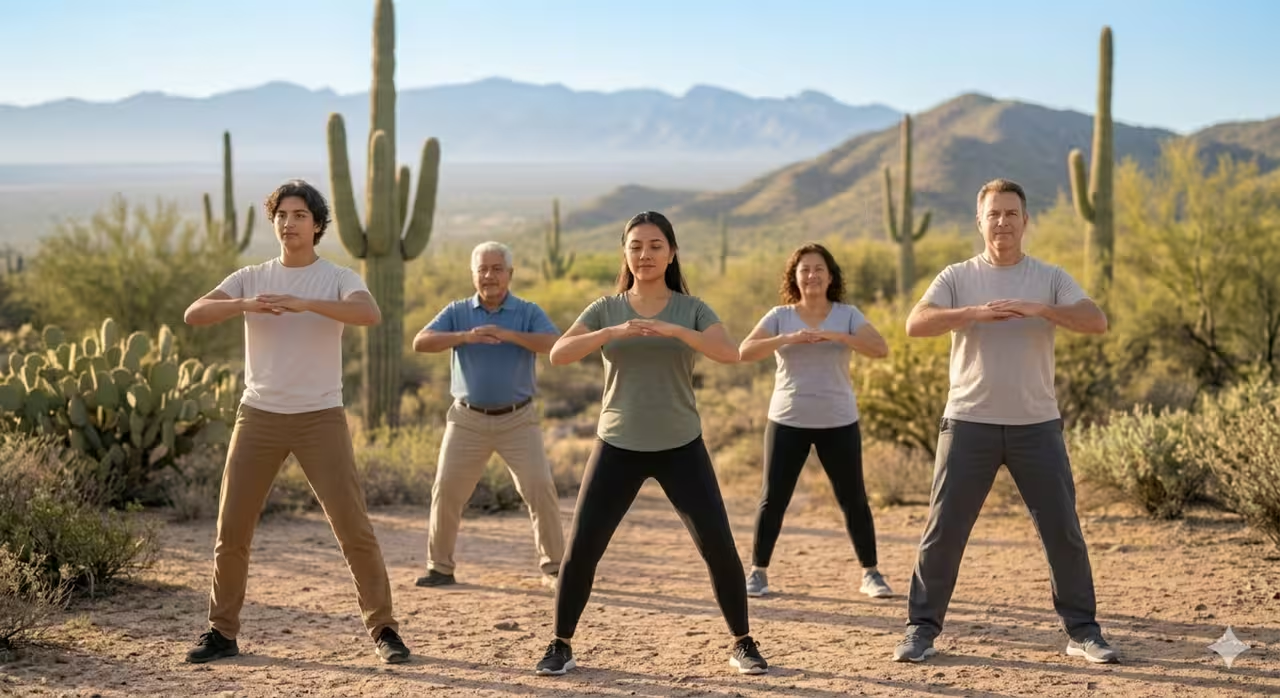
Classes are taught by volunteers who practice Falun Dafa themselves. They come from all walks of life: engineers, teachers, students, parents, and business owners. No one is paid, and nothing is sold. In Arizona, volunteers meet in parks across the Phoenix area, most often in Scottsdale, and in Tucson. Online, a global team teaches live webinars in many languages.
In Their Own Words
“Since I started practicing, the constant tension I felt from work has simply melted away. It isn’t just the exercises; it’s the change in mindset that helps me stay calm in any situation.”— Sarah J., software engineer, Mesa, AZ · practicing since 2021
What Are the Five Exercises of Falun Dafa?
Falun Dafa has four standing exercises and one sitting meditation. The movements are slow and gentle, and each one has its own calm music. You don’t need to picture anything or control your breathing. You simply relax and follow the movements. A full set takes about two hours, but you can do one exercise at a time.
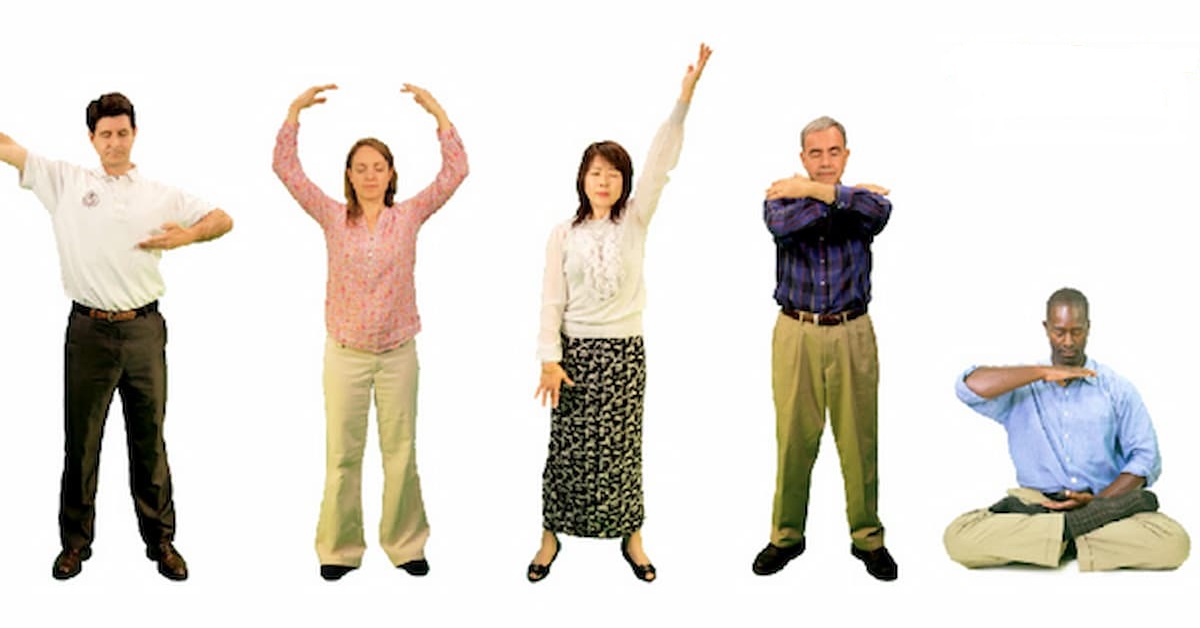
Exercise 1: Buddha Extending Numerous Arms
about 9 minutes
Slow, standing stretches that gently open up the whole body.
Exercise 2: Falun Standing Meditation
about 30 minutes
Four still, standing poses with the arms held in a circle, as if embracing a wheel.
Exercise 3: Channeling Energy From the Two Cosmic Extremes
about 9 minutes
The hands glide slowly up and down in front of the body.
Exercise 4: The Falun Method of Circulating Energy
about 12 minutes
The hands move slowly along the body, from head to feet and back again.
Exercise 5: Strengthening Higher Powers
up to 60 minutes
The sitting meditation. You sit cross-legged, go through a series of hand positions, and then rest in stillness. Beginners start with a few minutes.
The exercises are best learned by watching. Watch the free official instruction videos, or learn them live with a volunteer in our free webinar.
What Do People Notice When They Practice?
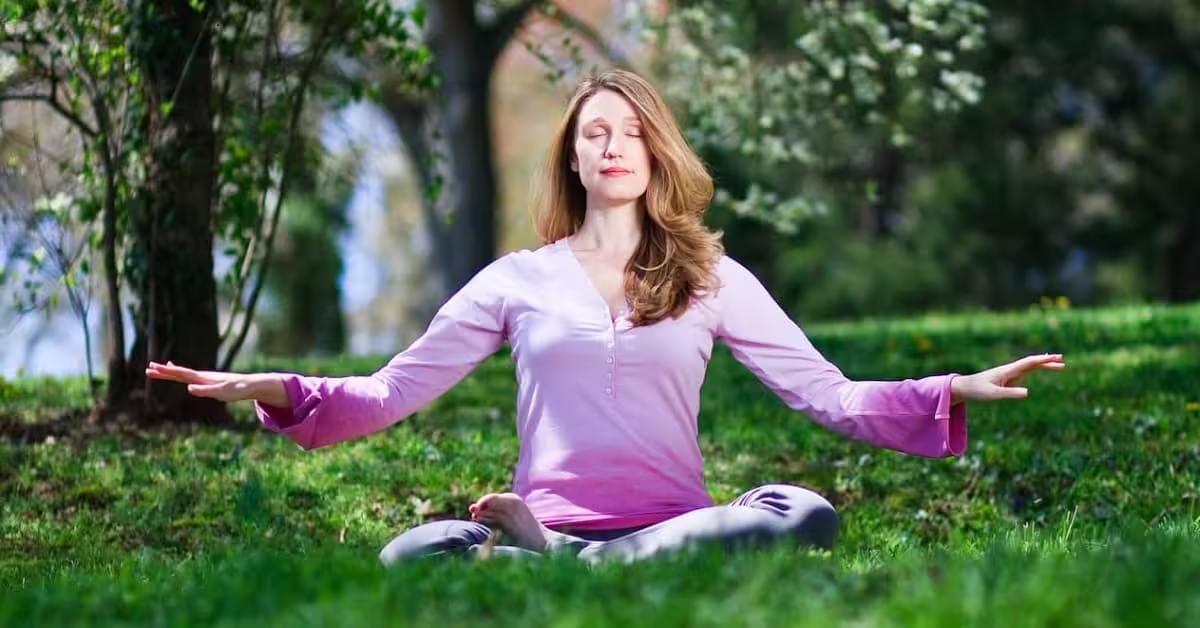
Everyone’s experience is different. Many people say they feel calmer and less rushed. Here is what practitioners often describe:
- •A more relaxed body: the slow movements help release the tension of a long day.
- •A quieter mind: the meditation gives a break from constant thinking.
- •More patience: living by Truthfulness, Compassion, and Forbearance helps them meet hard moments with patience instead of anger.
Falun Dafa is a spiritual practice, not a medical treatment. If you have a health condition, keep seeing your doctor.
Common Questions
Is Falun Dafa a form of qigong?
Yes. Falun Dafa belongs to the qigong tradition of China. What makes it different is that improving your character is at its heart, not only the exercises.
How much does it cost to learn?
Nothing. Falun Dafa is always taught free of charge. The books and instruction videos are free online, too.
Do I need to be fit or flexible?
No. The movements are slow and gentle. In the sitting meditation, beginners can cross their legs in whatever way is comfortable and build up over time.
How do I start?
Join the free live webinar, where volunteers teach all five exercises, or watch the official instruction videos at your own pace.
How long do the Falun Dafa exercises take?
About two hours for the full set: Exercise 1 about 9 minutes, Exercise 2 about 30, Exercise 3 about 9, Exercise 4 about 12, and the sitting meditation up to 60. You can do one exercise at a time.
Next Step
Learn the exercises with a volunteer
Join a free 2-hour live webinar. Volunteers teach all five exercises and answer your questions.