

In brief
Han Jiao-Jeon, a division chief at GM Korea, drank every day after work and smoked two packs a day while his marriage seemed to be ending. At 40 he found Falun Dafa, and found he could quit drinking as the wanting fell away. Coworkers now say he has lived two lives.
Only when I drank
Some questions never leave you alone. Some people quiet them with work, some with noise, some with a glass. If you’ve ever needed a drink just to stop thinking, you’ll understand Mr. Han.
Since he was a little boy, he kept asking the same thing. “Time is endless and men only live several decades,” he says. “Does life end when one dies, or is there something that goes on?”
No one around him understood. He had no one to talk to about it. He read the classics of philosophy and Buddhism, looking for an answer, and none of them gave him one.
“I could only let go of the questions when I drank,” he says. “In the end, I had a lot of drinking friends.”
After he started a new job, he drank every day after work, sometimes until midnight. He smoked two packs of cigarettes a day.
“My wife hated seeing me like that, but I just couldn’t control myself,” he says. “I’d drink anything, whatever I could get my hands on.”
At home, they fought constantly. “My wife and I used to fight, and then not talk for days. Every time we talked, we fought.” Their marriage seemed to have come to an end.
His health went down with it. He developed a stomach ulcer and relied on medicines. “Intense anxiety prevented me from sleeping,” he says.
And in 2002, with the financial crisis, his former company filed for bankruptcy. “It was hard on me and I had problems facing the reality,” he remembers. “I felt lost.”
If you’ve ever reached the point where the thing that numbs the pain has become part of the pain — you’re not the only one who has stood there.
Four days with a book
“When I hit the lowest point of my life,” he says, “I came across Falun Dafa.”
It happened on a visit to Bukhansan Mountain, where he saw a group of Falun Dafa practitioners doing their exercises. They looked peaceful.
He looked the practice up online. He learned the five sets of exercises from a practitioner and downloaded Zhuan Falun, the main book of the practice.
He read it in four days. For a man who had searched through philosophy since childhood, it answered the questions that had puzzled him for years.
“Every word in the book resonated with me,” he says. “I knew how to live my life, and my worldview changed.”
The exercises surprised him too. “The movements were round and slow, yet I started to sweat all over,” he remembers. “After I finished the exercises, I felt light and comfortable.”
When he bought a gift for the practitioner who taught him, the practitioner turned it down. “Practitioners do not take any payment or reward when they show others the exercises,” the practitioner told him. “When you show others the exercises, you must do the same.”
If you’ve spent years looking for an answer, you might remember how it feels when something finally speaks to the question you’ve been carrying.
Soft drinks without asking
A few days after he began practicing, he found alcohol disgusting.
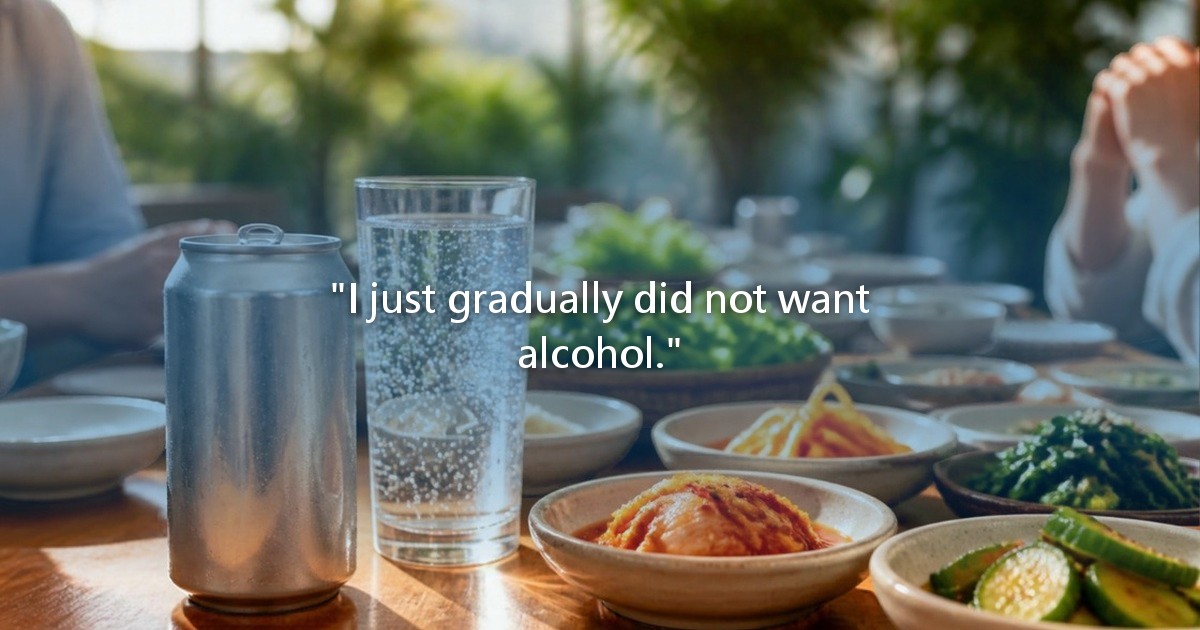
He is honest that it wasn’t a heroic fight. “I knew that I should stop drinking when I read Zhuan Falun, but I didn’t try very hard to quit,” he says. “I just gradually did not want alcohol, and started to avoid drinking occasions.”
He quit smoking at the same time. “I tried to quit smoking many times before and failed,” he says. “After I began reading the teachings, I easily stopped smoking.”
At work, the news that a known drinker had stopped spread fast. At company gatherings his coworkers urged him to drink, and he wouldn’t. A year later, they were handing him soft drinks without asking. The coworker sitting next to him quit smoking too.
People came to him wanting to know the secret. “I’d tell them of how I took up Falun Dafa,” he says, smiling. “From then on, when my coworkers saw me, they’d say, ‘Oh, Falun Dafa!'”
The change went past the bottle. As a supervisor he had done everything by the book, and his strict style had earned him a nickname: “viper.” Now he became gentle, and easier to talk to. “When I stopped blaming or accusing others,” he says, “it opened up the window of communication.”
When one of his team members damaged a luxury car and caused a big loss, Mr. Han, as the manager, had to shoulder the responsibility and the criticism.
“I tried to stop resenting my team member, but his face kept appearing in my head,” he says. “In the end, I realized that he did not do it on purpose, and he indeed blamed himself.” So he tried to protect him instead. The incident ended with only a warning. “Afterward, our team was more united than ever.”
If you’ve ever had someone’s face keep appearing in your head long after they hurt you — letting go may not happen in a day. It didn’t for him either.
At home, the man who used to fight and then go silent for days learned to listen. “When my wife got angry, I listened to her carefully,” he says, “and as soon as I did that, she calmed down.”
He does the dishes now, washes the car, and cleans the house, however tired he is. Helping out at home showed him how hard he had made things for her. “I put her in a terrible situation, and owe her a lot,” he says. “Now I want to repay what I owe.”
His daughter tells her friends, “My father has changed.”
For years, the only way he could let go of his deepest questions was a drink. Now the questions have their answers, and he no longer needs the glass to quiet them. His coworkers put it simply: he is “a man who has lived two different lives.”
What this story may hold for you
- Mr. Han drank to quiet questions nobody around him could answer. Perhaps what a habit is covering matters as much as the habit itself.
- He didn’t white-knuckle it: “I just gradually did not want alcohol.” For some people, the wanting changes before the willpower has to.
- He also stopped going to the places where the drinking happened. You might be kind enough to yourself to do the same.
- The marriage that seemed over began to mend when he started listening. Quitting can be the first step back toward the people you love, not the last.
- A miracle might be the body healing, or the heart letting go, or finding meaning again — or any mix of these.
If you’ve ever felt trapped by drinking or drugs, Sterling Campbell’s story may speak to you too.
A free guide for when quitting never sticks
If this story touched something in you, there are more like it.
Our free guide, When Quitting Never Sticks, gathers four true stories of people who tried to quit drinking, smoking or drugs again and again, and what changed for them, with a gentle page on how to begin.
It’s free. One email with the guide, then a few short letters. Unsubscribe any time.
Free guide (PDF)
When Quitting Never Sticks
Enter your email and we'll send you the guide (PDF) right away.
We never share your email.
Questions readers ask
Q: How do I quit drinking when I can’t control it?
Mr. Han says he “just couldn’t control” himself. For him, the wanting faded after he began reading Zhuan Falun and doing the exercises, and he avoided drinking occasions. If you are struggling with alcohol, please also talk with a doctor or an addiction counselor near you; you don’t have to do this alone.
Q: Can a marriage recover after years of drinking and fighting?
For Mr. Han and his wife, every conversation used to turn into a fight. After he began practicing, he started listening to her when she was angry, and helping at home. “I put her in a terrible situation, and owe her a lot,” he says. “Now I want to repay what I owe.”
Q: Where does this story come from?
From the Minghui.org report “Global Automaker Division Chief Enters a New Phase in Life” (September 23, 2022), by a Falun Dafa practitioner in South Korea. The quotes are Mr. Han’s own words as published in English.
A note on health
These stories share personal experiences and inner journeys. They cannot replace professional psychological or medical help, and please don’t stop or change any treatment because of a story. If you are in serious distress or crisis, please reach out to a qualified local counselor, doctor or crisis line.